


Description
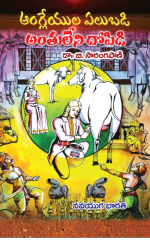
స్వాతంత్య్రం వచ్చిన తరువాత కూడా ఆంగ్లేయులు నెలకొల్పిన వ్యవస్థలను, పరిపాలనా పద్దతులను, చేసిన చట్టాలను నేటికీ కొనసాగించడం, ఆంగ్లేయులు సృష్టించిన వలసవాద కథనాలను పాఠ్యాంశాలుగా నేటికీ పిల్లలకు బోధించడం ఆంగ్ల భావజాలదాస్యానికి పెద్ద సాక్ష్యం. భావదాస్యంలోకి నెట్టివేయబడ్డ ప్రజలు స్వతంత్రంగా ఆలోచించలేరు. భారతీయులను ఆంగ్లమానస పుత్రులుగా తయారుచేయడానికి ప్రణాళికా బద్ధంగా పరాయి పాలకులు కృషిచేశారు. మన మేధోబానిసత్వపు మూలాల గురించి ఈ పుస్తకం విపులంగా చర్చిస్తుంది.
రాజకీయ స్వాతంత్ర్యం తరువాత కూడా సాంస్కృతిక బానిసత్వం కొనసాగితే, ఆ స్వాతంత్య్రానికి సార్ధకత ఉండదు. కనుక భావదాస్యవిముక్తికి కలిసికట్టుగా కృషిచేయాలని ఈ పుస్తకం పిలుపునిస్తుంది.
Publisher : Navayuga Bharati ; Paperback ; Author : B.Sarangapani ; Pages : 272




pkosigi (verified owner) – :
Book Review: “Colonial Discourse and the Suffering of Indian American Children” offers a postcolonial perspective and an objective analysis of James Mill’s distortions in his influential work, The History of British India. Mill served as a director of the East India Company and as an Examiner of Indian Correspondence. The Telugu version,”భావదాస్య మూలాలు” is not merely a translation of the original work; it is a valuable compilation enriched with insights and information drawn from several other acclaimed authors. It is a must-read for anyone seeking a deeper understanding of Bhārat’s historical narrative and aspiring to contribute to the “intellectual foundations” of Viksit Bhārat.
Chapter 7 is particularly significant, as it examines the impact of distortions in Bhārat’s history. It highlights Alexander Walker’s challenge to James Mill’s deeply prejudiced views of Hindu civilisation and discusses Mill’s subsequent acknowledgements of his errors. These historical details, as presented in the book, deserve greater scholarly attention and wider public recognition. The most striking irony, exposed in Chapter 2, is that James Mill never visited Bhārat!!! Yet, he constructed his theories and hypotheses about Hindu society and civilisation based on his own experiences, observations, and anecdotes relating to European, particularly white Christian, society. He then presumed that similar conditions and experiences must have existed in Bhārat. This raises fundamental questions about the objectivity, methodology, and credibility of his historical account. By bringing these issues to the forefront, the book invites readers to critically re-examine colonial interpretations of ‘Indian history’ and recognise the importance of recovering historical perspectives obscured by colonial biases. It is a thought-provoking contribution to the ongoing effort to understand Bhārat’s past through a more balanced and informed lens.
Note: James Mill never visited India! He wrote his massive and influential six-volume work, The History of British India (1817), entirely from his desk in London. Mill famously relied solely on dry colonial archives, official documents, and translated texts, boasting that a “critical judge” did not need to visit a country or know its native languages to write its history impartially.
A note from the web regarding the correspondence and critical engagement between the colonial administrator Brigadier-General Alexander Walker and the utilitarian philosopher James Mill is verified as historically accurate:
The Historical Interaction:
When James Mill was preparing the second edition of his highly influential—yet deeply prejudiced—work, The History of British India (originally published in 1817), he reached out to Alexander Walker. Mill had written his history entirely from archives in London without ever setting foot in India or learning any Indian languages. Conversely, Walker had spent roughly 30 years stationed on the ground in India (famously serving as the political resident in Baroda, Gujarat) and possessed an intimate, firsthand understanding of Indian society. In a letter dated September 14, 1819, Mill explicitly asked Walker to read his work and challenge his assertions, writing: “I therefore hope to earnestly request, that you will place a sheet of paper by your side when you read & put down your strictures as you proceed – above all that you will mark well the points on which you think that I am materially wrong.”
The Outcome of the Challenge:
From late 1819 through early 1820, Walker systematically read the text at his estate and provided robust criticisms of Mill’s Eurocentric biases.
Walker’s extensive notes and corrections successfully challenged Mill’s harsh, theoretical assessments. The impact of this challenge is immortalized in a subsequent letter from James Mill to Walker, in which Mill explicitly admitted: “You have convinced me that I had drawn the moral character of the Hindus in too dark colours.”